Seeking a Product Manager or Director role at a Series B to E startup.
A startup, Series B to E, in a product role where I own outcomes, not just outputs. Series A for the right team. People who love the outdoors, are constantly building, and lead with intentionality.
I've spent a decade making funnels perform. I want that rigor pointed at a product where the outcome is a person who's healthier or happier than they were.
Shipping Banana Bagel end to end changed how I think about product development and running leaner departments. With AI in the loop, the distance between an idea, a working prototype, and a real user test collapsed to days (I tested it). You still need good inputs and real users, but you no longer need four teams and a quarter to find out if something works.
mattmattsonCastle Rock, CO
mattmattsonBoulder, CO
mattmattson
mattmattson
mattmattsonNew York, NY
My business cards said marketing and optimization. The job was understanding why users stalled, shipping the fix, proving it moved the number, and bringing the people around me along.
Sitting in marketing gave me a front-row seat to user behavior. I spent my first years staring at where commercial manufacturers (Philips, Medtronic, and others) dropped out of a sales funnel and asking why: what they expected, what the page failed to answer, what friction we'd built without noticing. These formative years built the foundation for making observations, verbally and analytically.
At Volex I was promoted to website manager and led a full re-platform: vendor selection, requirements, stakeholders, launch. At Verde Natural a partial rebuild driven by that same behavior work quadrupled monthly active users within a year, and an organic content strategy grew a YouTube channel to 2,000 subscribers and 85,000 views in six months.
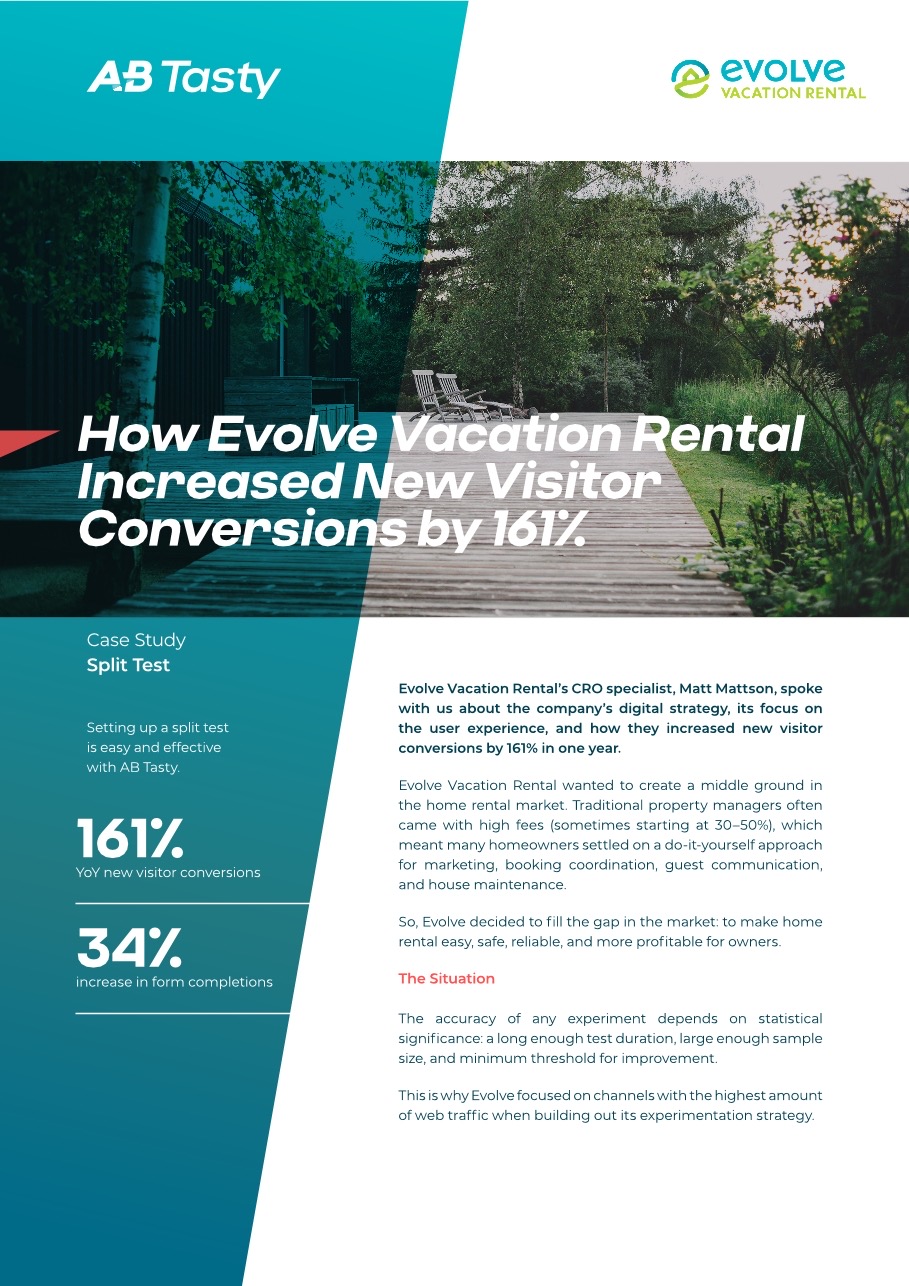
My plant biology professor always used to say "avoid opinions, the scientific method is how you validate if something is true or not." Evolve had no experimentation program when I arrived, so I built one: chose the tooling, wrote a multi-quarter roadmap, earned the CMO's buy-in, and ran 38 documented experiments in partnership with creative, paid media, product, and an outside agency. Every test was sized for statistical confidence before it launched, so a win meant a win, and the roadmap was ranked by expected return.
view
Paired with lead scoring from paid media and a closed loop with account management on lead quality, so conversion rose without hurting downstream close rates. The managed portfolio grew from about 8,300 to 10,000 properties over the same period.
Evolve was a Series E venture-backed startup. You got things done by playing every position: analyst one hour, HTML editor the next, the person negotiating with the agency after lunch. Thrivent is a Fortune 500 financial-services company, and the same work had to happen across eight-plus teams, compliance and legal included. What I learned there was how to operationalize what a scrappy team does by instinct.
I joined to build testing frameworks for landing pages across financial product lines. Two years in I was leading the operation around our website, and the biggest lesson was that the work only scales if people come with you. I led a team of three with a coaching-first approach, building frameworks they owned and ran independently, and built working relationships across engineering, analytics, creative, media, compliance, legal, brand, and campaigns so competing priorities turned into one roadmap.
Automated performance reporting with Looker Studio and the Search Console API so our content team could see live KPIs instead of asking our analytics team for a snapshot. Democratizing the data changed the conversations, and the prioritization it drove contributed to a 59% year-over-year lift in organic impressions.
Building Banana Bagel with Claude and Cursor showed me that moving from prototype to production can happen much faster with AI in the picture. The inputs still matter: real user problems, real data, real judgment about what to build. But the distance between an idea and something a runner can hold in their hand has collapsed.
That's the combination I'm bringing back to a startup: the range to play every position, and the experience to build systems that keep growth compounding long after the scrappy phase ends.
Each one started with a problem I had myself.
viewAI-assisted nutrition for endurance athletes. Product design, HealthKit integration, event instrumentation, mobile analytics, and user research, all mine.
Read the case study →

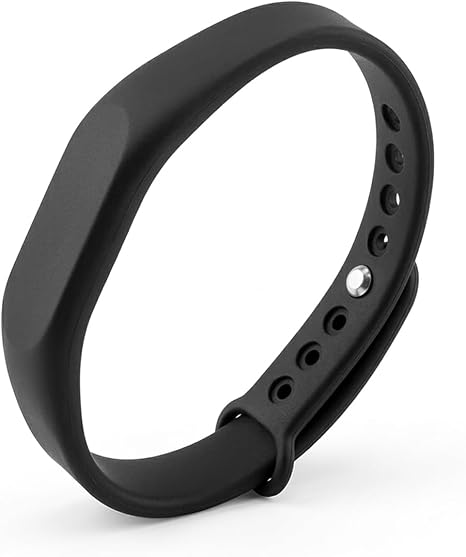
Built for Colorado Startup Week. An NFC wristband from Amazon, written with the URL of this site using the NFC Tools app. Tap a phone to my wrist and this portfolio opens. No cards to hand out, nothing to lose. Total cost: $20.
view
My first conference talk. Most college campuses wait to lay sidewalks until they can see where students actually walk. A website has the same foot traffic, one click at a time. The session showed how to find those paths in FullStory's hidden funnel maps and turn them into a more gratifying user experience.
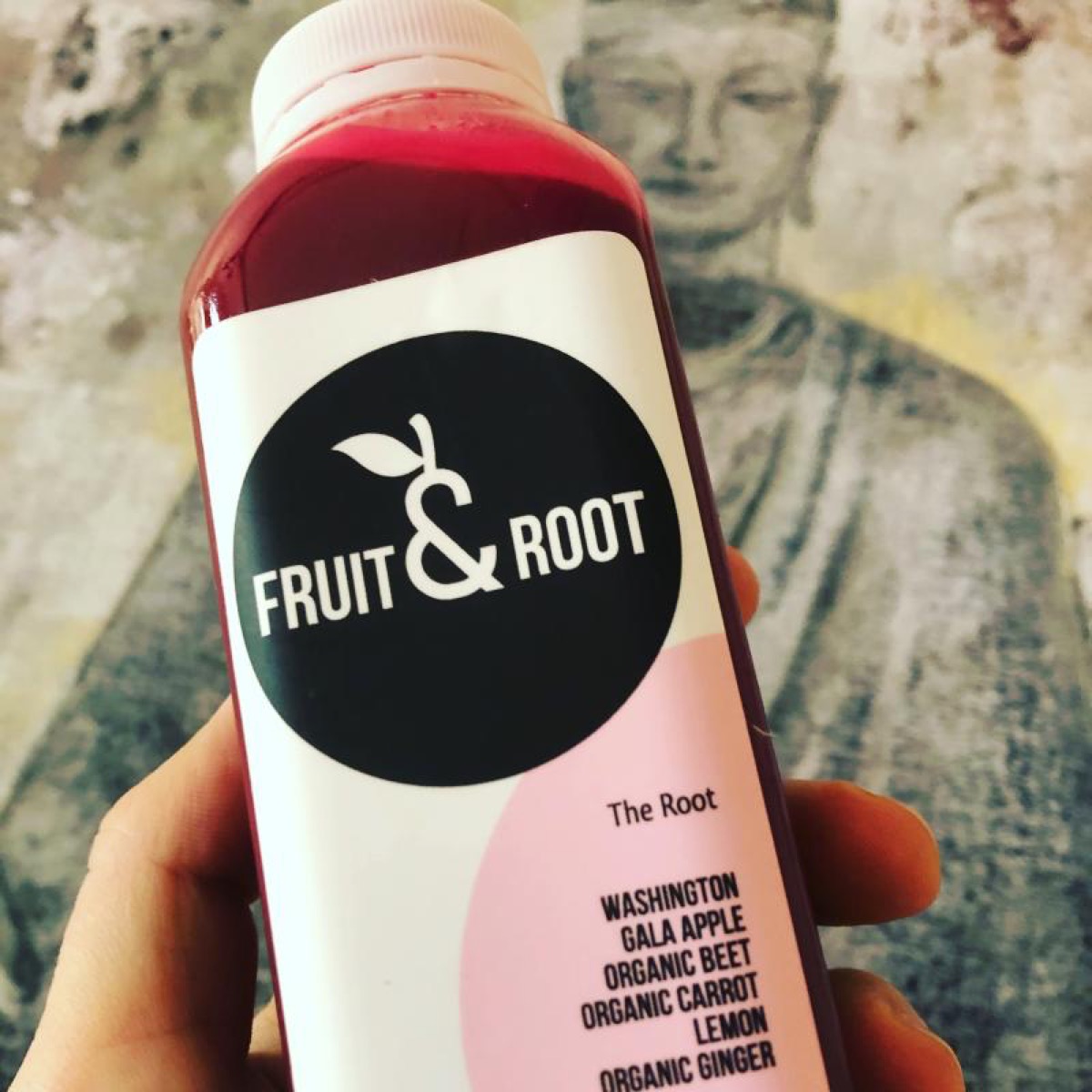
A direct-to-consumer juice business. Generated $20K in revenue and built distribution relationships with local gyms and fitness studios beyond the DTC channel. My first lesson in how far you can get by selling to the people who already gather around the problem.
Are we still doing these?
B.S. Business Administration, Marketing · West Virginia University · cum laude, 2014
Making sports nutrition more accessible for amateur marathoners. An iOS app I designed, built, and instrumented end to end.
An iOS app for runners training for a marathon. It tells you how much to eat, and what, for the kind of training day you actually have.
Nutrition apps have incredible features: photo-to-calorie capture, streaks, weight adjustment. As a marathon runner I found one big gap. None of them tell you how many calories and macros you need for an interval day versus a tempo day versus strength.
That gap is why people hit the wall at mile 20. Under-fueling across a training cycle, usually linked to RED-S (Relative Energy Deficiency in Sport), is one of the most common reasons race day goes wrong.
Banana Bagel calculates a runner's resting metabolic rate, then applies a MET value per workout type to set a baseline for each kind of training day. As the cycle progresses it recalculates daily, and if the actual workout burned more or less than planned, the day's targets shift with it.
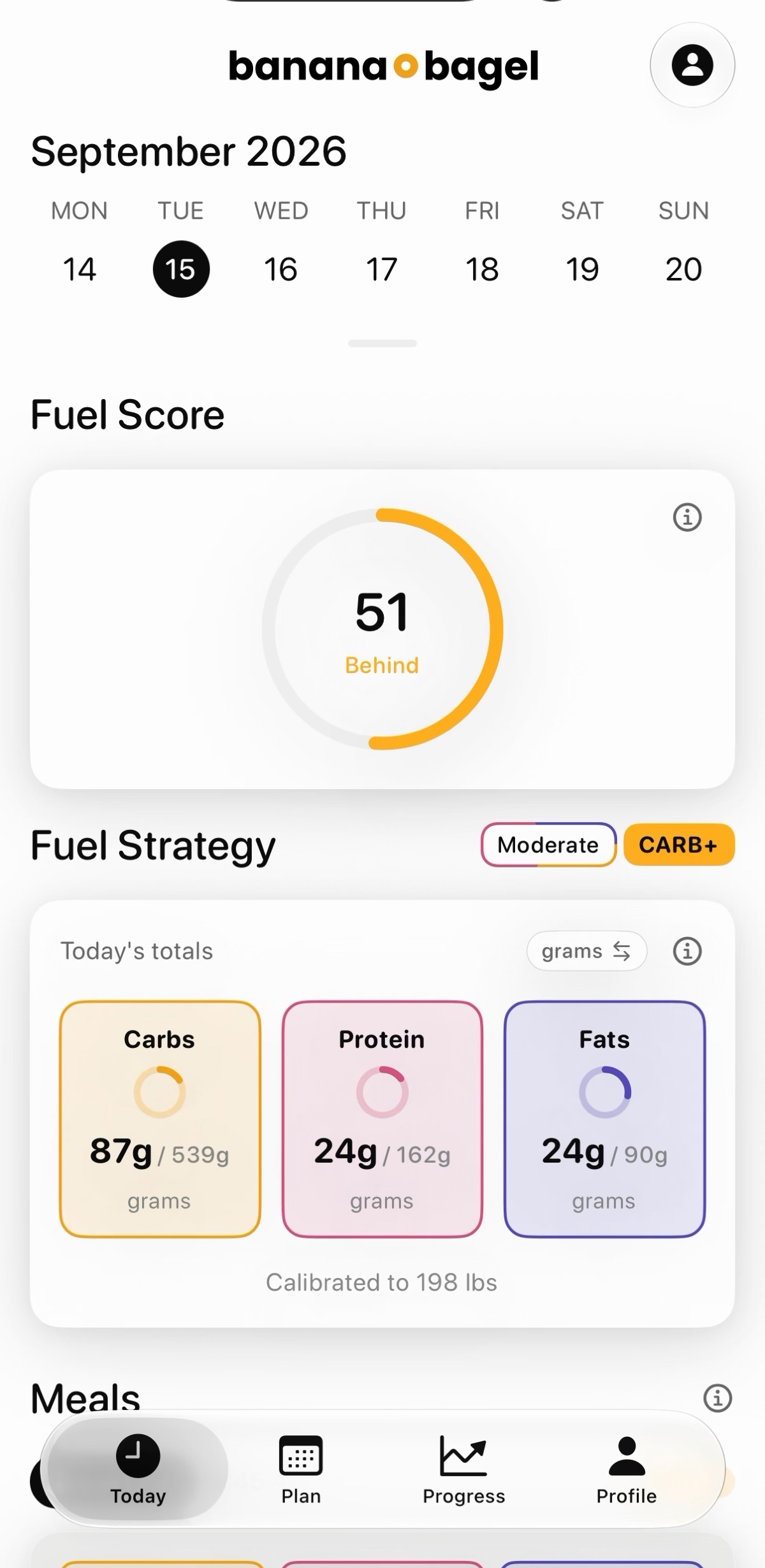
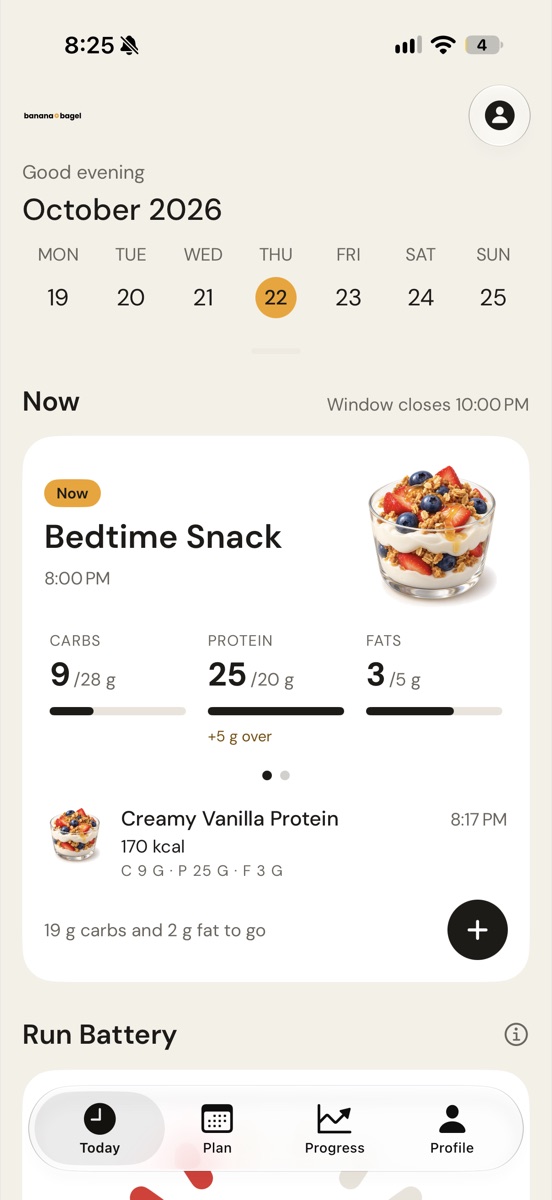
A bedtime snack window on a Thursday. The targets are set for the day's training, and the meal logs against them.

Logging is a photo. Point the camera at the plate, or scan a barcode or nutrition label, and an on-device model estimates the meal. No weighing, no searching a database, and every log shows the Fuel Score you'll land on before you commit.

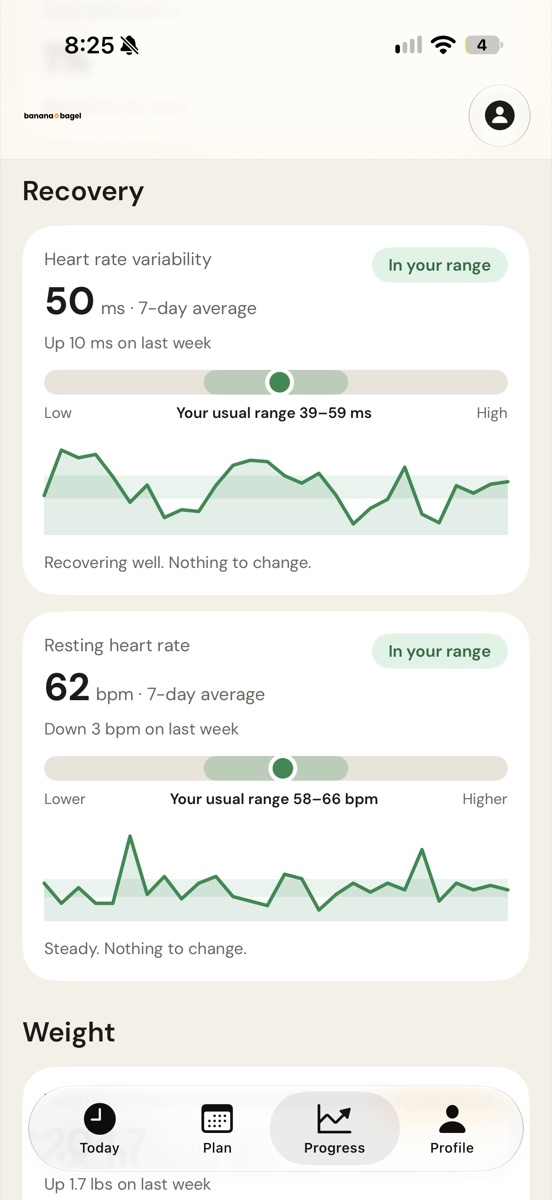
Recovery reads from Apple Health against your own 28-day range, not an age table. In range means nothing to change.
Pure SwiftUI and SwiftData, iOS 27 and up, one external dependency. MVVM with a single dependency-injection container, protocol-based repositories, and an actor-based cache with time-to-live so HealthKit is never read raw from a screen. The Today tab renders from cache in about 12 milliseconds, then backfills HealthKit in about 100 milliseconds, so the app is usable before the slow data arrives.
Stored calculations ship with versioned, idempotent data migrations, every async operation is instrumented against a written performance budget, and the architecture lives in a maintained map that a session-start check flags when the code drifts from it. I built it solo with Claude Code and Cursor, working from an engineering constitution I wrote for the agents: file size limits, loading discipline, a decision log for choices the code can't explain. That document is the product management.
The distance demands a carb-heavy diet across a 16-week-plus cycle, and most runners don't account for it, or for carbs on race day. The market is growing, races stick around, and buyers are active.
The app gives a good baseline, but nutrition is individual and an app alone can't close the gap. TrainingPeaks opened its platform to coaches. The same move here gives sports nutritionists a place to bring their existing clients, replaces their spreadsheets, and opens a second revenue line.